beginning of year

Monday, September 1, 2014

Transitioning to Lower Elementary- Who's Your Buddy?

The first day of school was momentous for one third of our class-  it was their first day in Lower Elementary!  We have found that the first year students' transition is to Montessori as beginning Kindergarten is to traditional schooling.  The first year students, having spent three years in their comfortable Primary classroom, have to leave the nest and hesitantly flap into our classroom- well, some glide in confidently, but the majority are cautious and slightly nervous.


After observing the difficulties of the transition for a few years, we decided to  pair up our first year students with a third year "buddy" to help them acclimate to the new environment.  While our Lower Elementary class retains many similarities from Primary, just navigating the new room and finding lessons can be daunting.  Our third year buddies relish their leadership role and gain important skills in patience and mentoring.  After the first week or two, the first year students gain confidence and rely on their buddies less and less.

Third year buddies helping new first year students during the first week of class.


 We'd love to hear how you help your first years transition to Lower Elementary!

Sunday, July 6, 2014

Our Classroom Constitution


Another beginning of the year ritual is the constructing of our classroom constitution (I know, it's a mouthful!).  We always have an end in mind (the guidelines we want to end up with), but it's important to let the students guide the process.  We ask the students what they think the rules need to be for the class and record all of the suggestions.  Then, we go through and compile any that are similar, broaden any that are too narrow and phrase them in a positive way.  For example, instead of don't hit others, don't kick others, don't punch others, etc., we will rephrase it to- We will respect others' personal space.  After everyone agrees to the final draft, some of the students copy it onto a poster and all the students in the class sign it.  We hang it on the wall so everyone can see it.

Last year, we added a rights and responsibilities section to our constitution.

It is powerful because the students create it! We refer back to it during the year when a conflict arises or if a student is having a hard time meeting classroom expectations.

Beginning of the Year Routines

It's always so much fun getting everything ready for a new school year, even though it can be an exhausting first month!  It's important to establish a routine for as many class procedures as possible, because it will eliminate chaos and confusion.  One really important procedure (for my sanity) is our classroom chore chart.  We have thirty-six students, so it can get pretty messy after a busy day!  Since we have so many students, we pair our younger students with an older student so we have buddy pairs that work together.  We also don't do all of the chores at the same time, so that all 36 students are not trying to clean at once!  Some chores are completed before lunch (snack monitors, cubby monitors, lunchroom assistants, etc.) and some are completed right before dismissal (area monitors, floors, dusters, etc.).  The students really enjoy helping to take care of their classroom and the working on the practical life opportunities that the chores afford!


Another really important routine for us is the lunch count/attendance board.  Our students can bring lunch, order lunch, or order milk.  Throughout the years, we have tried several different methods of gathering this information each morning, looking for the method that affords the students the most independence.  We finally hit on this board.  Each student has a peg with their name, and he/she puts up a tag each morning as they walk in the door- blue- brought lunch, red- ordering lunch and white- ordering milk.  Then, a teacher records the students who are ordering lunch on a sheet and it is sent to the office.  This also allows the teachers to also easily see who is absent each day.


What are some classroom routines that you find helpful to establish?

Wednesday, July 2, 2014

How Do You Track Your Students' Work?

It's not the most beautiful example, but it's real life!
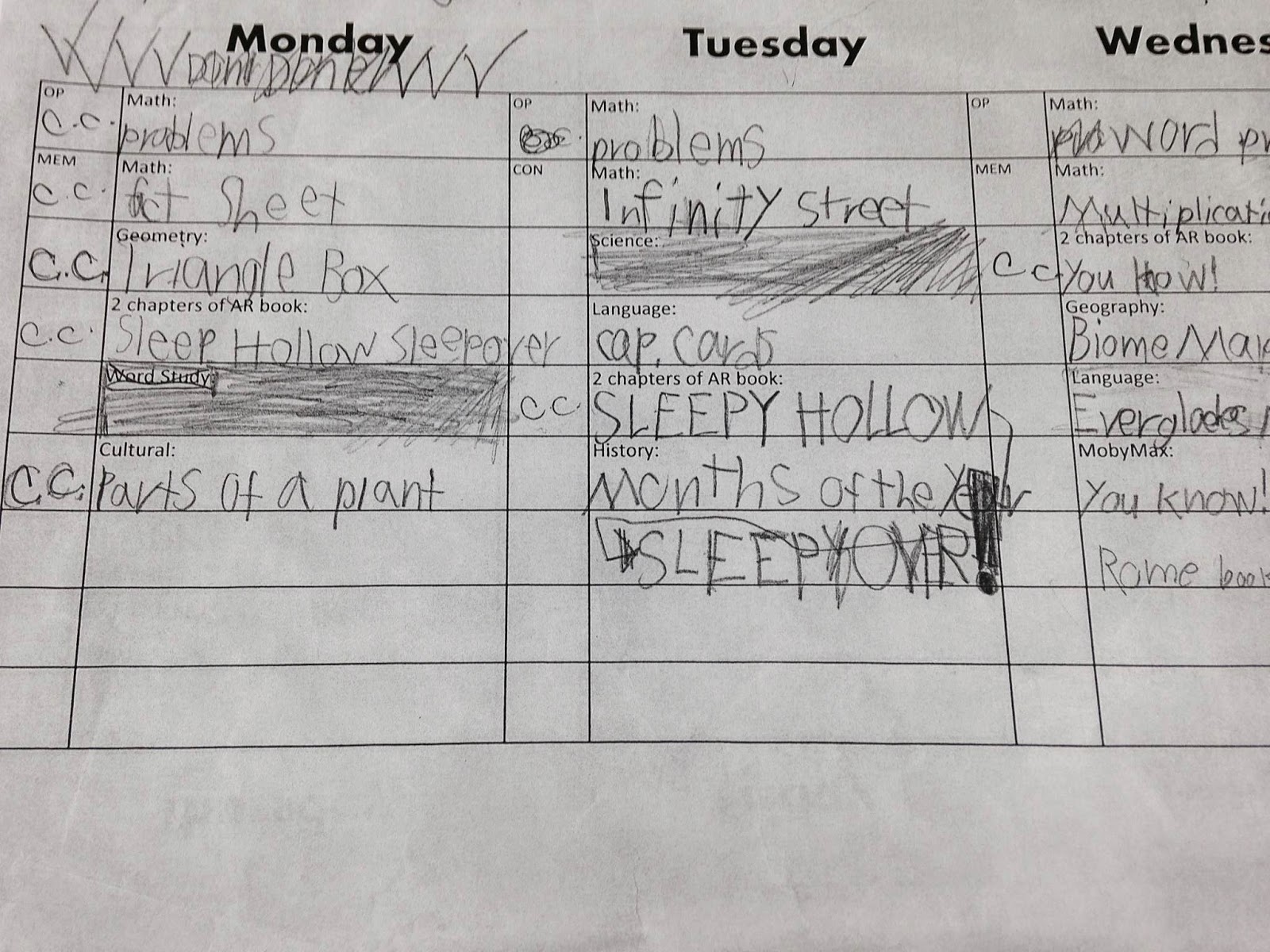
One of the most challenging things about teaching at a Montessori school is how we track the work that our students do independently.   I'm a huge believer in best practices, and I looove to observe in other Lower El classrooms.  Unfortunately, there are not many Montessori schools in our area, so we thought we would host a virtual observation!  Every teacher has come up with their own tracking system, and we'd love to hear about yours!

We'll start it off by sharing our system, which we tweak from year to year.

We have a weekly plan, which varies a little for each grade.  The students fill in a choice for each category on the plan when they come in the classroom each morning.  They get to fill in the blank lines with their choice of lessons once they have completed the category choices.  We started choosing categories for them to help ensure that they chose lessons in all areas each week.  When a student finishes a work, they show it to a teacher, who signs it off for them.


Then, we noticed that certain students would get really attached to a certain lesson and do it over and over and over and over... you know what I'm talking about!  Now, repetition is beneficial, but you know when a student is doing the same lesson over and over because they are too comfortable to choose another work.  So, we made a work folder with sign-off sheets that allow us to track how many times a student has done a certain lesson.  There are four boxes to sign for each lesson, and we tell the students that once they have done the lesson four times, it is time to choose a different lesson in that area.  The sign-off sheets are mainly for cultural lessons, and we break them down into small categories, for example, the Timeline of Life layout is divided into the Paleozoic Era, Mesozoic Era, and Cenozoic Era, so the students can do each era layout four times before we guide them to another lesson.  If a student is really attached to a certain lesson and wants to keep working on it, we encourage her/him to start a project about that topic.  More on projects to come later!
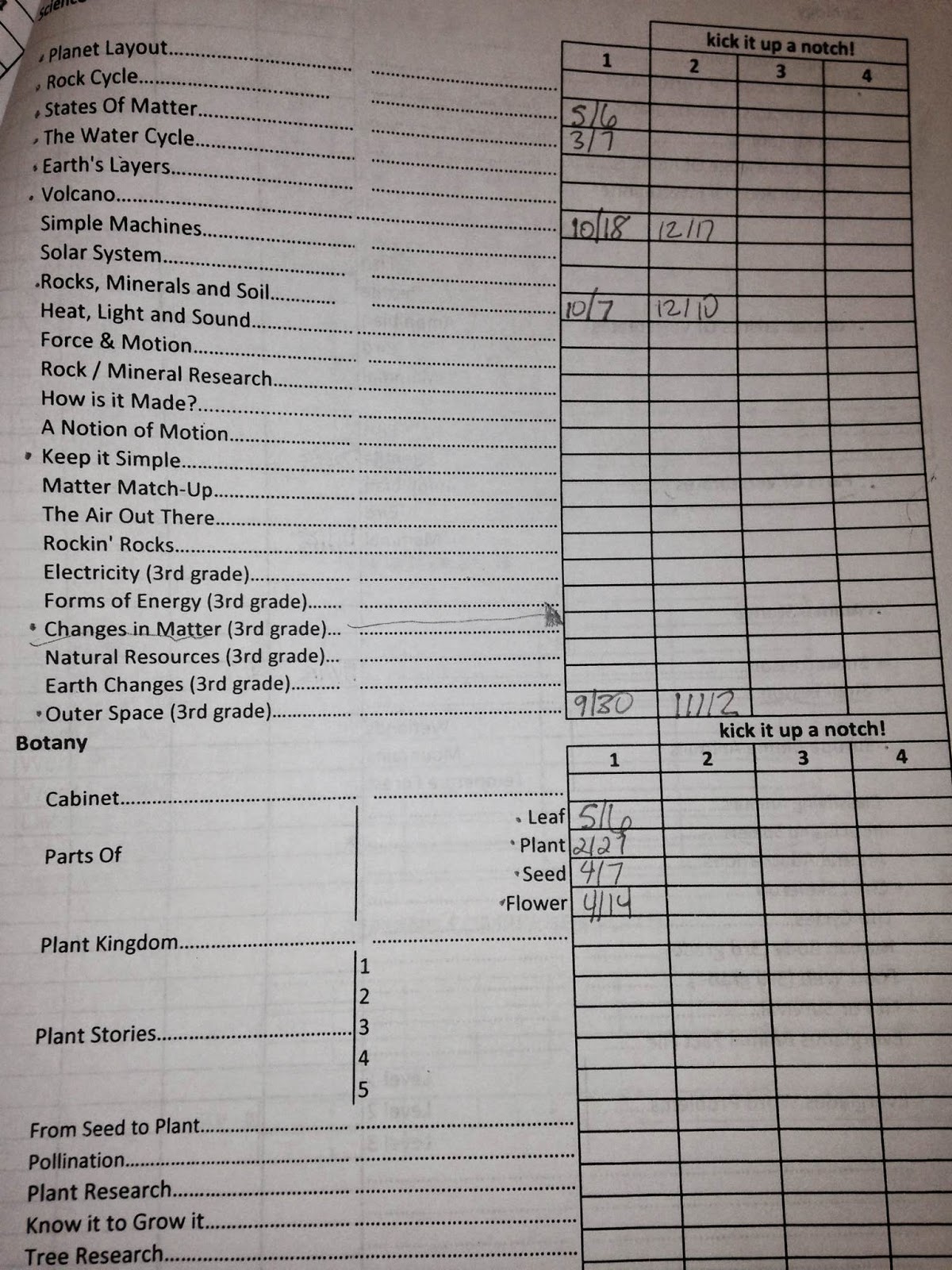
So, that's where we are with our work-in-progress!  Again, we'd love to hear what works for you!

Friday, June 27, 2014

A Really Gross Lesson


At the beginning of the year, we talk a lot about class procedures.  One of the most important procedures is handwashing!  We have a snack table, and the students are able to get snack as they are hungry, once we have established the snack procedures (get the snack necklace, put on the snack shoes, wash hands, take the amounts indicated, eat at the snack table in about 5 minutes so that classmates can also enjoy snack).  Somehow, the one step that is usually "forgotten" is the handwashing.  We talk a lot about the importance of cleanliness and how germs spread, but there is nothing like a visual reminder!

So, we did an experiment to see how many germs are on our hands even when they look clean.  We all wiped our hands on one half of the apple and didn't touch the other apple.  We left the two halves in a clear plastic container with a lid near the snack area for observation.  After about two weeks, the half that we all touched was covered in nastiness, and the half that we left alone was relatively germ-free.  We discussed our findings and realized that it IS really important to wash our hands with soap even though they might look clean!

Thursday, June 26, 2014

Grace and Courtesy in Lower El


Grace and Courtesy lessons are a huge part of our Lower El curriculum.  At this plane of development, our students are looking outward- at peers, classmates, and friends- and socialization is in full swing.  That's why it's so important to model how to be good friends and classmates with them.  We spend quite a bit of the first two weeks of school sharing Grace and Courtesy lessons with the class- in group time and in small group lessons.  One lesson that we shared last year was based on the book How Full Is Your Bucket? for Kids by Tom Rath.  We used it to illustrate the importance of showing kindness to others.  After we read the book to the class and discussed it, we showed them the bucket with the drops in it and talked about different scenarios that might cause them to add a drop to our class bucket.  The students really enjoyed it, and for the first few months of school, we had students count the drops and report to the class how many drops were in the bucket.  It's helps them concretely visualize an act of kindness and gives you a way to start conversations about acts of kindness.

© Sustainable Montessori. Made with love by The Dutch Lady Designs.